

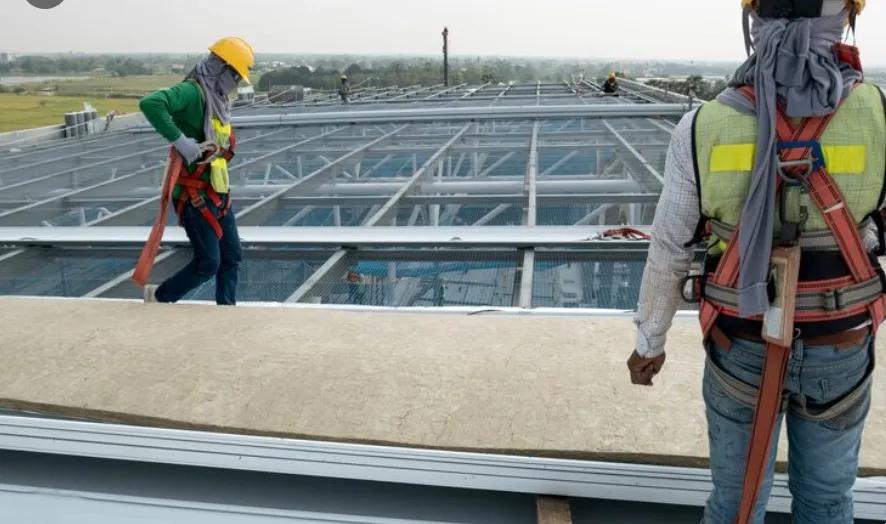
Spray foam roofing has become a widely discussed roofing option for commercial properties because of its insulation performance, seamless application, and energy efficiency. However, like any roofing system, it also comes with challenges that property owners should understand before making long-term maintenance decisions.
This guide by Hiline Commercial Roofing explains common spray foam roofing problems in ND, why they happen, and how building owners can manage roof performance over time.
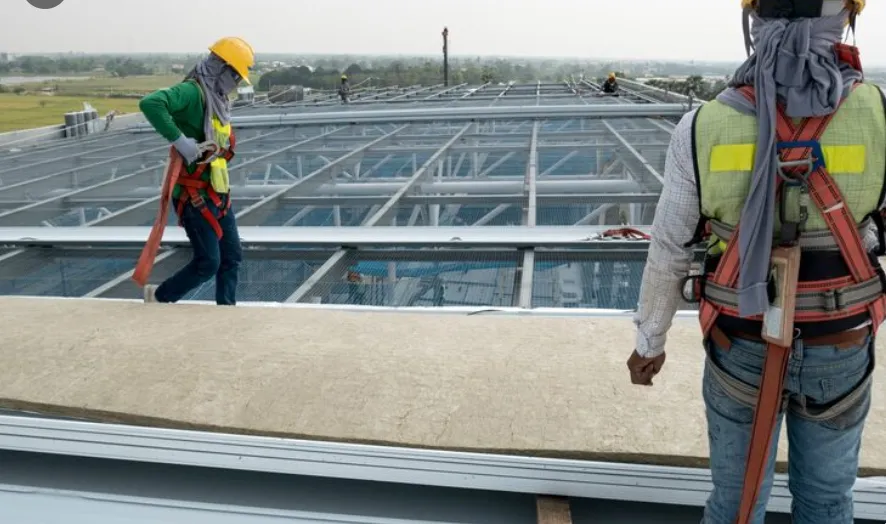
Understanding Spray Foam Roofing
Spray foam roofing, also called Spray Polyurethane Foam (SPF) roofing, is a roofing system created by spraying liquid foam directly onto an existing roof surface. The foam expands and hardens into a continuous insulating layer and is typically protected with an elastomeric coating.
Commercial facilities often choose spray foam roofs because they:
Add insulation value
Create seamless waterproof protection
Reduce energy loss
Adapt to irregular roof shapes
Require minimal tear-off during installation
Despite these advantages, environmental conditions in North Dakota can influence roof performance.
Why Climate Matters for Spray Foam Roofing in ND
North Dakota experiences:
Extreme winter temperatures
Snow accumulation
Freeze-thaw cycles
Strong winds
Seasonal moisture exposure
These conditions can accelerate roofing wear if inspections and maintenance are ignored.
Understanding spray foam roofing problems in ND helps building owners make informed decisions rather than reacting after damage appears.
1. Moisture Intrusion Beneath the Foam Layer
One of the most discussed concerns with spray foam roofing is hidden moisture.
Because SPF forms a seamless surface, water may travel beneath damaged areas before becoming visible.
Signs of moisture intrusion:
Interior leaks
Soft roof sections
Blistering surfaces
Increased energy costs
Causes:
Damaged protective coatings
Poor drainage
Existing moisture trapped during installation
Routine inspections help identify moisture before structural damage develops.
2. Surface Cracking From Temperature Changes
North Dakota’s seasonal temperature swings can place stress on roofing materials.
Over time, spray foam roofs may develop:
Hairline cracks
Surface separation
Expansion-related stress points
Small cracks are not always severe, but if left untreated they may allow water penetration.
Prevention:
Scheduled roof inspections
Timely recoating
Monitoring seasonal movement
3. UV Exposure and Protective Coating Degradation
Spray foam itself is not designed to remain exposed.
Roof coatings protect the foam from ultraviolet radiation and weather conditions.
When coatings deteriorate:
Foam becomes brittle
Surface erosion increases
Water resistance decreases
Common warning signs:
Fading color
Rough texture
Visible foam exposure
Commercial roof maintenance plans often include periodic coating renewal.
4. Improper Drainage and Ponding Water
Although SPF roofing can improve drainage when correctly installed, standing water may still develop.
Ponding water risks:
Coating deterioration
Accelerated aging
Increased structural load
Drainage issues may occur because of:
Roof settling
Blocked drains
Inadequate slope design
Water management remains one of the most important factors in extending roof lifespan.
5. Installation Errors
Many spray foam roofing problems originate during application rather than years later.
Examples include:
Uneven foam thickness
Incorrect mixing ratios
Poor surface preparation
Application under unsuitable weather conditions
Quality installation practices significantly affect long-term roof durability.
Building owners should request documentation of preparation procedures and inspection standards.
6. Mechanical Damage From Foot Traffic
Commercial roofs frequently experience maintenance traffic.
Spray foam surfaces may become damaged by:
HVAC servicing
Equipment installation
Heavy tools
Repeated walking paths
Protection methods:
Designated walk pads
Scheduled inspections
Controlled roof access
Preventive maintenance reduces unnecessary surface wear.
7. Blistering and Delamination
Blistering occurs when trapped air or moisture creates raised areas beneath coatings.
Delamination refers to separation between roofing layers.
Possible causes include:
Moisture contamination
Surface preparation issues
Environmental exposure
Ignoring these conditions can eventually compromise waterproof performance.
8. Limited Maintenance Awareness
A common misconception is that spray foam roofing requires no maintenance.
Like every roofing system, SPF benefits from:
Annual inspections
Coating evaluations
Drain cleaning
Minor repairs before major issues develop
Preventive maintenance generally supports longer roof performance.
How Property Owners Can Reduce Spray Foam Roofing Problems
Commercial building owners can improve roof reliability through practical maintenance practices.
Recommended actions:
Schedule regular inspections
Inspect before and after winter seasons.
Address coating wear early
Protective coatings are essential to roof performance.
Keep drainage systems clear
Remove debris and monitor water flow.
Document maintenance history
Track inspections and repairs for future decisions.
Monitor interior conditions
Unexpected humidity or energy changes may indicate roofing concerns.
When Should a Spray Foam Roof Be Evaluated?
Consider evaluation if you notice:
Recurring leaks
Rising utility costs
Surface cracking
Standing water
Roof age exceeding maintenance schedules
Early evaluation may reduce repair complexity.
Frequently Asked Questions (F/Q)
Is spray foam roofing suitable for North Dakota weather?
Spray foam roofing can perform in North Dakota conditions when installed correctly and maintained according to climate demands.
What is the biggest spray foam roofing problem?
Moisture intrusion and coating deterioration are among the most commonly discussed issues.
How often should spray foam roofs be inspected?
Commercial roofs are commonly inspected annually and after severe weather events.
Does spray foam roofing leak?
The foam itself forms a seamless barrier, but damage, aging, or neglected maintenance can eventually allow water intrusion.
Can spray foam roofing be repaired?
Many roofing concerns can be addressed through maintenance and localized repair depending on roof condition.
How long does spray foam roofing last?
Service life varies based on installation quality, maintenance frequency, climate exposure, and coating renewal.
Final Thoughts
Understanding spray foam roofing problems in ND helps commercial property owners make informed roofing decisions. Environmental exposure, maintenance practices, and installation quality all influence long-term performance.
At Hiline Commercial Roofing, education and informed maintenance planning support better roofing outcomes. Property owners who understand potential roofing challenges are better prepared to maintain roof durability, efficiency, and long-term value.